
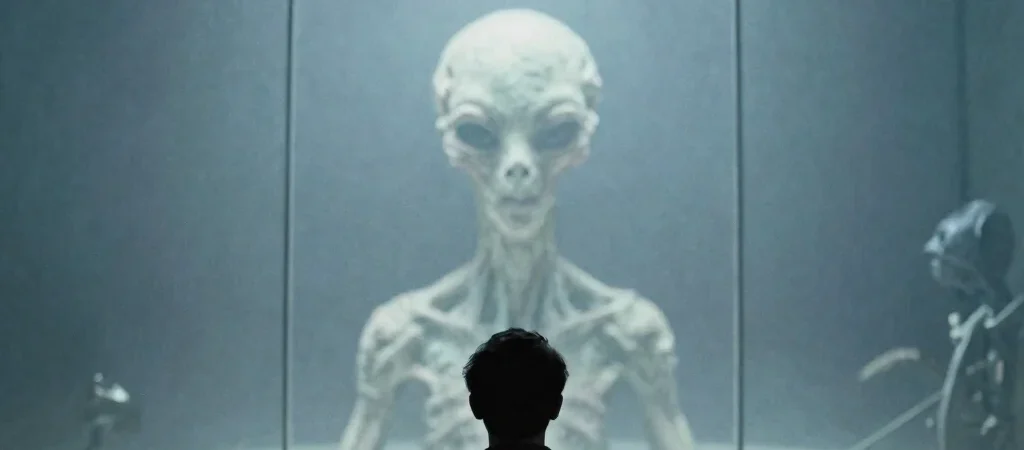
In Arrival, the first problem is not how to defeat an unknown visitor; it is how to ask a question without knowing whether it will be understood. Amy Adams plays linguist Louise Banks, brought in to interpret the language of the beings whose ships have appeared around the world. Denis Villeneuve’s film is an absorbing, deliberately serious piece of science fiction, strongest when it treats communication as difficult work rather than a magic key.
Listening before acting
Louise’s attention to small marks, sounds, and context gives the film a welcome specificity. Adams makes her intelligence visible without turning every scene into a display of brilliance; uncertainty is part of the performance. That focus grounds the enormous premise in the patient labor of trying to understand another mind.
A deliberately solemn rhythm
Jóhann Jóhannsson’s spare, unsettling score and Bradford Young’s hazy cinematography create an atmosphere that feels both intimate and immense. The pace is measured, sometimes so restrained that the human characters can seem remote beside the film’s ideas. If you want a brisk alien-invasion thriller, this is not quite that movie.
A premise that keeps unfolding
Arrival’s central idea reaches beyond decoding symbols: it asks how language shapes what a person can notice and imagine. The film is careful about how it reveals its meaning, and the less said about its later turns, the better. It rewards viewers drawn to cerebral science fiction and leaves a lingering question about what understanding might ask of us.